
Los Angeles stays mild all year, with warm, dry summers and most of its rain falling between December and March. May, June, and October tend to offer the easiest combination of sunshine and comfortable temperatures for sightseeing. Typical highs run from the high 60s to the low 90s Fahrenheit, lows from the mid-40s to mid-60s, and the city collects around an average annual rainfall typical for its climate, with most precipitation concentrated in winter.
TL;DR:
- For winter 2026–27, the outlook gives Southern California a 50% to 60% chance of above normal precipitation, so choose flexible bookings and check forecasts.
- Coastal mornings can stay gray in May and June; schedule beach visits for early afternoon, while inland sightseeing fits better in the morning.
- Winter rain can slow freeways and surface streets, while strong Santa Ana winds may ground helicopter tours or close hiking trails, so leave schedule flexibility.
- Late summer afternoons in the Valley or Downtown can be hazier as ozone rises; visitors sensitive to air quality should favor winter mornings after rain.
Table of Contents
- Month-by-Month Climate Normals: Highs, Lows, and Rainfall
- How the Seasons Break Down for Visitors
- Best Months to Visit and What to Pack
- What the 2026-27 El Niño Outlook Means for Winter Travel
- Average Monthly Humidity Levels
- Typical Sunshine Hours per Month
- Wind Patterns and Their Effect on Local Weather
- Air Quality Through the Seasons
- How Weather Affects Traffic and Tour Schedules
- How Weather Shapes the Experience at Popular Attractions
- A Local Guide’s Take on Timing Tours Around the Weather
- Book a Weather-Smart Hollywood Tour
- FAQ
- Sources
Month-by-Month Climate Normals: Highs, Lows, and Rainfall
The numbers below come from NOAA NCEI’s 1991-2020 climate normals for the Los Angeles station, the federal government’s official 30-year reference period for averaging weather data. Climate normals smooth out year-to-year swings so a single hot or wet year doesn’t distort what’s “typical” for a given month.
February stands out as the wettest month on average, while July is typically the driest, often seeing almost no measurable rain at all. That gap defines the rhythm of the local climate: a wet season that runs roughly from late fall through early spring. A long dry stretch that covers nearly the entire summer.
Because normals are averages, any single month can run wetter or drier than the chart suggests, especially during an El Niño or La Niña year. NOAA’s documentation on climate normals notes that the agency also publishes alternative 15-year normals for users who want a more recent baseline, though the 1991-2020 set remains the standard reference most forecasts and travel guides use.
How the Seasons Break Down for Visitors
Winter, spring, summer, and fall each bring a distinct feel to Los Angeles, even though the swings are smaller than in most of the country.
- Winter (December through February): Cooler nights, the heaviest rain of the year, and the best odds of a rainy day disrupting outdoor plans, so travelers should build in flexible indoor options.
- Spring (March through May): Temperatures climb steadily while rainfall drops off fast, making late spring mornings some of the most comfortable hours for walking tours.
- Summer (June through August): The hottest stretch of the year inland, but coastal mornings often start overcast under the marine layer, so beach areas can feel noticeably cooler than downtown or the Valley.
- Fall (September through November): Warm afternoons, minimal rain, and some of the clearest skies of the year, which makes it a strong window for late-afternoon coastal visits and outdoor photography.
The practical takeaway is that “nice weather” in Los Angeles depends on where you are as much as when you visit. A June morning at the beach and a June afternoon in Hollywood can feel like two different climates entirely.
Best Months to Visit and What to Pack
May, June, and October consistently offer the best balance of warm, dry days without the peak heat of midsummer and are ideal times to explore outdoor spots like Deukmejian Wilderness Park in Glendale. August runs hottest on average, while December is the coolest month, though even then daytime highs rarely dip below the mid-60s.
- Pack light layers. Mornings and evenings run cooler than midday, even in summer.
- Bring sunscreen and sunglasses year-round. Clear skies are common even in cooler months.
- Carry a light jacket for evenings, especially near the coast where temperatures drop faster after sunset.
- Pack rain gear if visiting between December and March, when short but sometimes heavy storms are most likely.
- Schedule Hollywood Walk of Fame and Hollywood Sign photo stops for mid-morning, after any marine haze clears but before afternoon heat peaks.
- Plan coastal visits for midday in summer, once the marine layer has burned off, and save inland sightseeing for early morning or late afternoon to avoid the hottest hours.
Pro Tip: Booking a small-group tour during warmer months keeps you out of the heat longer between stops and gives you more control over timing than a large coach tour locked to a fixed schedule.
What the 2026-27 El Niño Outlook Means for Winter Travel
A very strong El Niño carries a 50 to 60 percent probability of above-normal precipitation for Southern California during the winter of 2026-27, based on the Climate Prediction Center’s September 2026 outlook.
The NOAA Climate Prediction Center’s long-range outlook issued in September 2026 points to greater than a 90% chance of a very strong El Niño developing through fall and winter, with elevated odds of a wetter-than-usual winter across the region. That’s a meaningful shift from a typical dry-summer, modest-winter pattern, but it’s worth keeping in perspective: seasonal outlooks are probabilistic. CPC’s own guidance on interpreting these forecasts stresses that higher odds don’t guarantee any specific storm will hit on a given day.
If you’re planning a winter 2026 or early 2027 trip, book flexible accommodations and tours where possible, and check a 7 to 10 day forecast closer to your travel dates rather than relying on the seasonal outlook alone.
Average Monthly Humidity Levels
Humidity in Los Angeles stays moderate most of the year, generally feeling more comfortable than the muggy summers common in the Southeast or Gulf Coast. Coastal neighborhoods and the Westside tend to run more humid, particularly in late spring and early summer when the marine layer is active, while inland areas like the San Fernando Valley and Downtown stay noticeably drier.
Morning humidity is typically higher across the region, especially in June and July, then drops through the afternoon as temperatures rise and the marine layer clears. Winter months bring their own humidity bump during and after rain events, though it clears quickly once storms pass. For visitors, the practical effect is that a hazy, humid morning near the coast often gives way to a dry, clear afternoon, which matters when timing outdoor activities that look better in full sun, like Hollywood Sign photo stops or rooftop viewpoints.
Typical Sunshine Hours per Month
Los Angeles ranks among the sunnier major American cities, with the clearest stretch running from June through September, when hazy marine mornings aside, afternoons are reliably bright. Even winter months see a fair amount of sunshine between storms, since rain tends to arrive in short, concentrated systems rather than long overcast stretches.
May and June can bring more cloud cover than their position in the calendar suggests, a side effect of the marine layer that keeps coastal mornings gray before the sun breaks through by midday. That pattern, often called “May gray” or “June gloom” locally, fades by July as the marine layer weakens. For sightseeing, this means outdoor viewpoints and open-air attractions tend to photograph best in the early afternoon during late spring, once the morning haze has lifted, and nearly any time of day from midsummer through early fall.
Wind Patterns and Their Effect on Local Weather
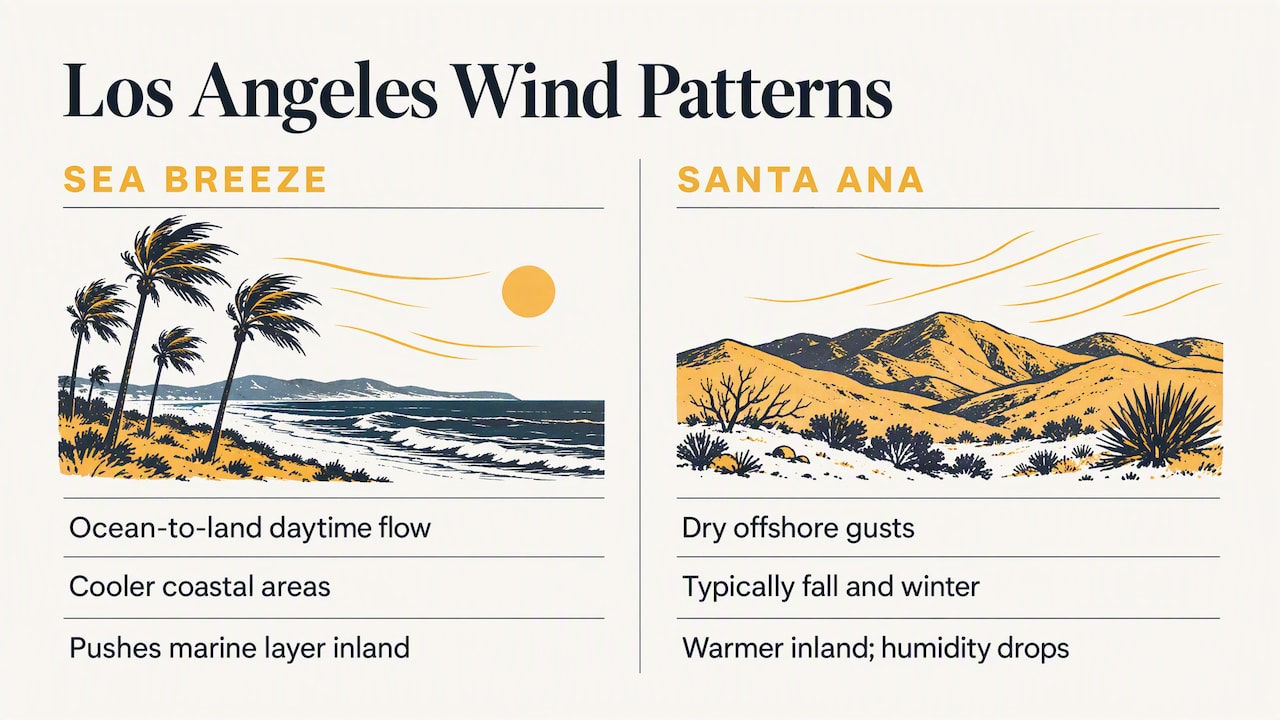
Wind in Los Angeles usually moves in from the ocean during the day, a sea breeze that keeps coastal areas cooler and helps push the marine layer inland each morning before it burns off. This onshore flow is part of why beach neighborhoods feel milder than Downtown or the Valley on the same afternoon.
The exception comes with Santa Ana winds, dry offshore gusts that typically arrive in fall and winter, pushing temperatures up sharply inland and dropping humidity fast. These events can bring unusually warm, dry stretches even in December, and they’re also the primary driver behind the region’s wildfire risk in fall. For travelers, Santa Ana conditions mean a sudden warm spell is possible even outside the typical hot months, so checking a short-range forecast before a fall or winter trip is worth the extra few minutes.
Air Quality Through the Seasons
Air quality in the Los Angeles basin varies noticeably by season, shaped by the same geography that traps heat and haze against the surrounding mountains. Summer tends to bring the highest ozone levels, as intense sun and stagnant air cook vehicle and industrial emissions into smog, particularly during inland heat spikes.
Winter generally brings cleaner air thanks to more frequent rain, which washes particulates out of the atmosphere, though Santa Ana wind events can stir up dust and wildfire smoke that temporarily worsens conditions. Spring and fall usually land in between, with clearer stretches between pollution episodes. Visitors sensitive to air quality may find winter mornings after rain the clearest time to enjoy outdoor viewpoints, while late summer afternoons in the Valley or Downtown can feel hazier, especially during heat waves.
How Weather Affects Traffic and Tour Schedules
Rain has an outsized effect on Los Angeles traffic because the city simply isn’t built around frequent storms. Even a moderate winter rain event can slow freeways and surface streets well beyond what the same rainfall would cause elsewhere, which matters for anyone budgeting travel time between attractions.
Santa Ana wind events add their own disruption, occasionally grounding helicopter tours or closing hiking trails when gusts get strong enough. Marine layer mornings, by contrast, rarely affect driving but can delay the best light for photography at outdoor spots until the haze clears, typically by late morning. Tour operators generally build buffer time into winter itineraries and shift start times later on marine-layer mornings to land during the clearest part of the day. If you’re booking tours yourself, building in a little schedule flexibility during the wetter months protects against both traffic delays and last-minute itinerary changes.
How Weather Shapes the Experience at Popular Attractions
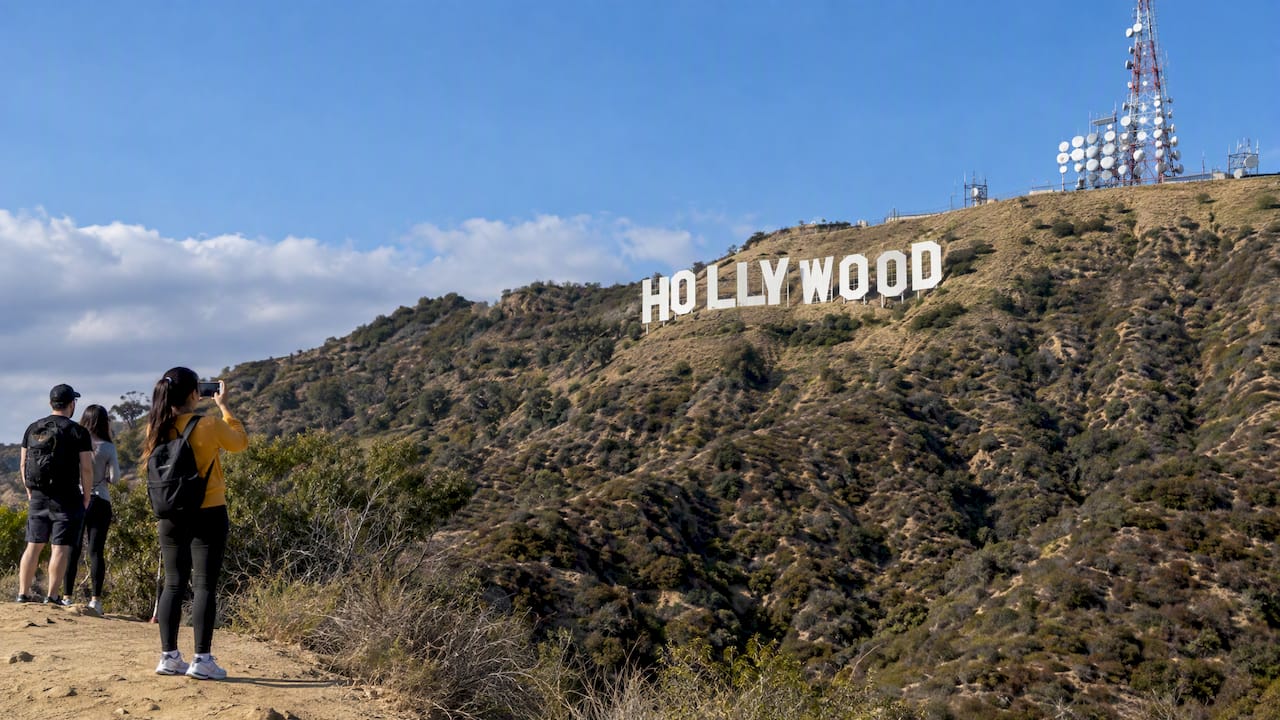
Weather changes more than comfort at Los Angeles attractions. It changes what you can actually see. The Hollywood Sign and other hillside viewpoints look sharpest on clear days, which are common from late spring through fall but less guaranteed in winter or during a hazy June morning before the marine layer lifts. Rain can also close certain hiking approaches to the sign temporarily.
The Hollywood Walk of Fame and other street-level attractions are largely weather-proof day to day, but summer afternoon heat can make a long walk uncomfortable without shade breaks, while winter rain pushes foot traffic indoors and thins out the sidewalks. Coastal lookouts and beach-adjacent stops depend heavily on whether the marine layer has cleared, with the best ocean views typically arriving by early afternoon in late spring and summer. Matching attraction type to time of day, not just time of year, makes a bigger difference in Los Angeles than in most cities.
A Local Guide’s Take on Timing Tours Around the Weather
We schedule our Hollywood routes with these patterns in mind. Morning departures work best for Hollywood Sign photo stops once any marine haze has cleared, and our small-group format means we can adjust pacing on a hot August afternoon or a damp December morning. Guests benefit from real-time adjustments to timing that help dodge heat or rain.
— vincent
Book a Weather-Smart Hollywood Tour
Whatever the forecast, a small-group format lets us time stops around the day’s actual conditions rather than a fixed script.
- The Hollywood Sign Tour works well on clear spring and fall mornings when hillside views are sharpest.
- The Celebrity Homes Tour suits mild, dry afternoons when outdoor home views are easiest to enjoy from the street.
- The Hollywood to Santa Monica Tour pairs city sightseeing with the coast, ideal for days when you want to escape inland heat.
Check current availability and book your preferred route on our Hollywood Sign Tour page.
FAQ
What is the weather like in Los Angeles by month?
Los Angeles runs mild and dry for most of the year, with winter months (December through February) bringing the most rain and summer months (June through August) running warmest and driest. Spring and fall sit in between, with low rainfall and comfortable afternoon temperatures that make them popular for outdoor plans.
What is the best month to visit Los Angeles?
May, June, and October generally offer the best mix of warm days, low rainfall, and manageable crowds for sightseeing. August tends to run hottest, while December is typically the coolest month of the year.
What is the weather like in LA all year round?
Average highs range from the high 60s in winter to the low 90s in late summer, with lows between the mid-40s and mid-60s depending on the season. Annual rainfall totals around 13 to 14 inches, concentrated almost entirely between December and March.
What will the weather be like in Los Angeles in 2026?
A very strong El Niño gives the winter of 2026-27 a 50 to 60 percent chance of above-normal precipitation in Southern California, according to the Climate Prediction Center’s September 2026 outlook. That’s a probability, not a certainty, so checking a short-range forecast closer to your travel dates remains the most reliable way to plan.
How does the marine layer affect sightseeing in LA?
The marine layer brings overcast mornings to coastal and nearby areas, most common in late spring and early summer, before typically clearing by midday. Planning coastal visits for early afternoon and inland sightseeing for morning hours usually avoids the haziest conditions.
Sources
- Climate Prediction Center – Long-Range Outlooks (Sept 2026)
- Summary of Monthly Normals (NOAA NCEI) — Los Angeles station