
Griffith Observatory is free to enter, open Tuesday through Sunday, and one of the best places in Los Angeles to see the city, the Hollywood Sign and the night sky in a single stop. What costs you is the hilltop logistics: parking, crowds around sunset and a planetarium that sells tickets only on the day. This guide covers what to do, when to go and how to get up the hill without losing an hour to traffic.
TL;DR
- Admission to the building and grounds is free. Parking and Samuel Oschin Planetarium shows are the only things you pay for.
- Hours are noon to 10 p.m. Tuesday through Friday and 10 a.m. to 10 p.m. on weekends. The Observatory is closed on Mondays.
- Sunset is the most beautiful and the most crowded time. Arrive at least 90 minutes early, or take the DASH bus.
- Planetarium tickets are same-day and in person only, so buy them as soon as you arrive.
- Public telescopes open for looking after dark, weather permitting, and the lines move steadily.
Table of Contents
- What you get for free
- Hours, closures and when to go
- Getting there without the parking headache
- Griffith Observatory at sunset
- The planetarium: what to know before you queue
- Stargazing: what to expect
- How long to stay
- Making it work for every kind of visitor
- Practical tips in one place
- Our perspective: the Observatory is better as part of a day
- Pair the Observatory with a Hollywood tour
- FAQ
- Sources
What you get for free
The Observatory’s own visitor page is clear that this is a free-admission facility on the south side of Mount Hollywood, in Griffith Park. Walking through the doors, exploring the exhibits, using the terraces and looking through the telescopes costs nothing.
Sits at roughly 357 meters (1,171 feet) above sea level, according to the Observatory’s sunrise and sunset data. That height is why the views work: downtown Los Angeles, the Hollywood Sign and, on a clear day, the Pacific.
The main things to see:
- The terraces and roof. The views are the reason most people come. The Hollywood Sign sits to the west, downtown to the southeast.
- The Gunther Depths of Space. The most hands-on galleries in the building, and the best choice if you want to learn something rather than just look.
- The telescopes. The public telescopes are free once it gets dark and skies are clear.
- The grounds and lawn. Good for a picnic-style break, a quiet moment, or photos of the building itself.
Hours, closures and when to go
The schedule hasn’t changed: noon to 10 p.m. Tuesday through Friday, 10 a.m. to 10 p.m. Saturday and Sunday, closed Monday. The grounds and roads generally follow Griffith Park hours, 5 a.m. to 10:30 p.m. Check the official calendar before you go for special closures and the day’s sunset time. On October 16, 2026 it showed sunset at about 6:20 p.m.
The building is busiest on weekends, in summer, on holidays and at sunset, per the same page. That gives you a simple way to choose:
| Goal | Best time | Why |
|---|---|---|
| Quiet exhibits | Weekday at opening (noon) | Fewer people on the terraces and in the galleries |
| Golden-hour views | 90 minutes before sunset | You get parking and a rail spot before the rush |
| Telescopes | An hour after sunset on a clear night | Dark enough to see, before the late crowd thins |
| Families with small kids | Weekend morning or weekday afternoon | Shorter lines, more daylight to explore |
Travel experts consistently recommend opening time or a weekday if you want a calmer visit.
Getting there without the parking headache
The address is 2800 East Observatory Road, Los Angeles, CA 90027. There are three realistic ways up.
Take the DASH Observatory bus
The dedicated DASH shuttle skips most of the parking stress. One local guide reports a fare of 50 cents and a route from the Vermont/Sunset Metro station, but fares change, so confirm it before you travel. For a sunset visit this is the least stressful option by a wide margin.
Drive and pay for parking
All parking in the Observatory lot and on surrounding roads requires a paid fee during operating hours, according to travel experts. The single-lane road up the hill backs up on weekends and at sunset. If you drive, aim to be there early and be ready to circle or park lower down and walk.
Walk up from the park
The Observatory is the starting point for several Griffith Park hikes, and a walk up from the Greek Theatre area or the Fern Dell side is a good way to skip parking entirely. Wear real shoes and bring water. The hill is exposed and warm in the afternoon.
Plan your ride back
Phone reception is notoriously weak near the Observatory. If you rely on a rideshare app, request your pickup before you are deep in the crowd, or walk down the hill to a spot where your signal is stronger and the traffic is lighter.
Griffith Observatory at sunset
Sunset is when the terraces fill with people watching the city shift from daylight to a field of lights. It is worth doing once. It is also when you are most likely to wait for parking, wait for the restroom and shoulder through a crowd for a photo.
A sunset plan that works:
- Check the sunset time on the official calendar the day you go. It shifts by roughly a minute or two every day and moves a lot over the seasons.
- Arrive 90 minutes to two hours early. Use that time for the galleries while the terraces are still manageable.
- Buy planetarium tickets first if you want a show, since sold-out times don’t come back.
- Claim a terrace spot 30 minutes before sunset. Face west for the Hollywood Sign and the color in the sky.
- Stay for the telescopes. Once it is dark, the public telescopes open up, weather permitting, and the line is part of the evening.
- Leave on your terms. Either go with the first wave and avoid the exit crush, or linger until after 8 p.m. when the road clears.
If you would rather not manage the drive, parking and timing yourself, our Griffith Observatory sunset tour is built around that evening. You ride in a small group with a live local guide instead of fighting for a parking space.
The planetarium: what to know before you queue
The Samuel Oschin Planetarium is the one paid attraction inside. Current prices are $12 for adults, $10 for seniors, students and teachers, and $8 for children ages 5 to 12, per the Observatory’s published information.
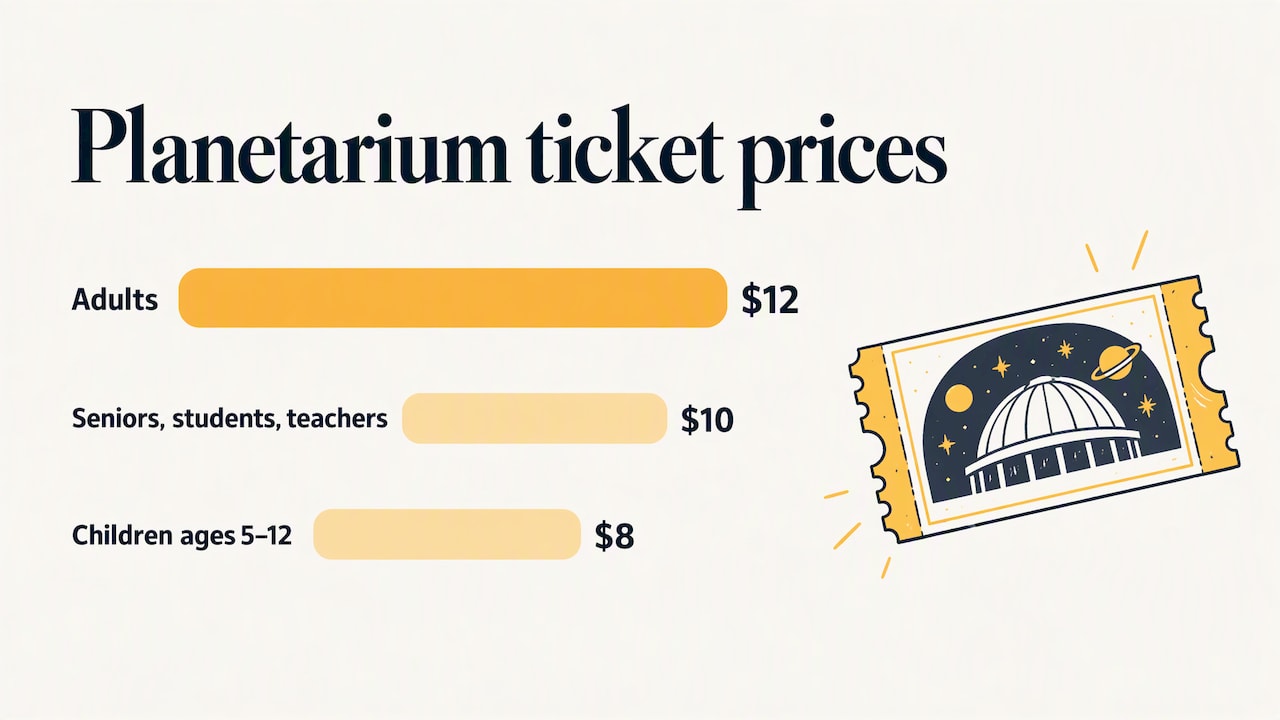
The catch: tickets for the general public are same-day and in person only, at the on-site box office or kiosks. There is no online booking for the general public. Advance reservations for parking and planetarium tickets are a Foundation member benefit only. If you are visiting on a Saturday, go to the box office before you do anything else.
Stargazing: what to expect
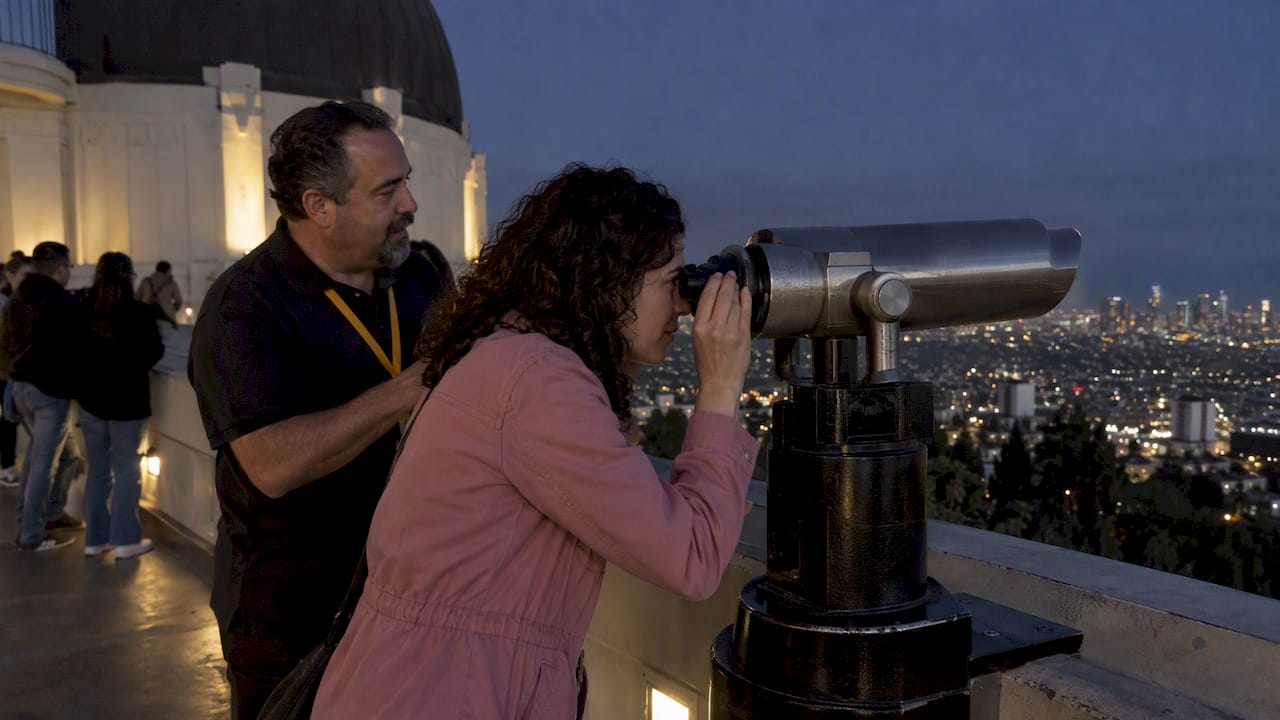
Griffith Observatory is good for stargazing in the sense that matters most to a first-timer. You look through real telescopes, staffed by people who explain what you are seeing. It is not a dark-sky site. You are above a city of millions, so don’t expect the Milky Way.
The public telescopes are only usable after sunset and when skies are clear. Lines form but move well with staff help. Check the weather before you go, and remember that marine-layer clouds can roll over the hill on otherwise nice days.
The Observatory also runs special evenings. Its events calendar lists public star parties, so look there if you want something beyond a regular night. If you enjoy this kind of evening, observatory visits are a great trip theme anywhere: a stargazing evening at the Perinaldo observatory in Italy shows how another small hilltop observatory handles booking and visits.
How long to stay
Plan on two to three hours for a relaxed visit: an hour for the galleries, time on the roof and terraces, and a planetarium show if you buy a ticket. Add an hour for sunset and telescopes. Staff encourage visitors not to worry about seeing everything in one trip. It is a place to come back to.
If you also want to see the Hollywood Sign up close or visit celebrity neighborhoods, do the Observatory as one stop in a longer day, not the whole day.
Making it work for every kind of visitor
The Observatory publishes a pre-visit guide for observers of all learning styles. It suggests outdoor terraces and the lawn for a calmer, low-sensory visit, and the Gunther Depths of Space galleries for interactive engagement. For mobility needs, read the accessibility page before you go. It says the building and grounds are accessible to all visitors.
Families: bring layers (it gets breezy up there after dark), snacks for the wait and a plan for the kids’ energy. The lawn is a good pressure valve.
Practical tips in one place
- Go on a weekday if you can. It is the single biggest improvement to the visit.
- Bring a jacket. The hill is cooler and windier than the city below, especially after dark.
- Fill your water bottle and eat before you go, since choices on the hill are limited.
- Download directions before you leave, because signal is weak.
- Don’t treat sunset as your only window. Mid-afternoon light on the Hollywood Sign is excellent for photos.
- Have a backup plan if the road is backed up. Park lower and walk, or switch to the DASH.
Our perspective: the Observatory is better as part of a day
We run sightseeing tours across Los Angeles, and the Observatory comes up in nearly every conversation with first-time visitors. Our view is simple. It is one of the best free things in the city, and visitors enjoy it most when they treat the hill as a good stop rather than a wrestling match.
The people who have the hardest time are the ones who drive up at 5 p.m. on a Saturday with no plan. They spend an hour in the queue, miss the golden light and arrive at the terrace in a bad mood. The people who have the best time have decided in advance how they are getting up, when they are arriving and what they want to see first.
We also think the best Los Angeles days mix views with context. Seeing the Hollywood Sign from the terrace is one thing. Understanding how it fits with Hollywood Boulevard, the neighborhoods beneath it and the film history around it is another. That is why our small-group tours pair a live local guide with onboard screens and video content, and offer audio guides in more than 11 languages. If you want help planning the rest of the day, our guides on where tours stop in Hollywood and how to see the Hollywood Sign the best way are a good start.
— vincent
Pair the Observatory with a Hollywood tour
If you want the Observatory plus the rest of Hollywood without driving, we offer several ways to build the day:
- The Hollywood Sign Tour is $199 per group.
- The Hollywood to Santa Monica Tour, 4.5 hours, is $79 per person.
- For a view of the Observatory from above, our helicopter tours start with the 10-minute Hollywood Sign flight at $159 per person, and a sunset experience add-on is $50.
- Exotic car tours start from $69 for the Spyder Tour.
Prefer a private day? Read how to book private sightseeing in Hollywood. Browse everything on our homepage.
FAQ
How do I get into Griffith Observatory?
Walk in. Admission to the building and grounds is free, and no advance reservation is needed for general entry. You only pay for parking if you drive and for planetarium shows. You can also reach it on the DASH Observatory bus or by hiking up from Griffith Park.
Is Griffith Observatory good for stargazing?
Yes, for a guided, accessible experience. The public telescopes are free after sunset when the sky is clear, and staff help with the line. The city’s light pollution limits what you see, so expect the Moon, planets and bright objects rather than a dark-sky show.
How long should I spend at Griffith Observatory?
Two to three hours covers the galleries, the roof and a planetarium show. If you are staying for sunset and the telescopes, plan four hours or more. Staff say you don’t need to see everything in one visit.
What is the elevation of Griffith Observatory?
About 357 meters, or 1,171 feet, above sea level, based on the Observatory’s own location data. That height gives it the views of downtown, the Hollywood Sign and the coast.
Sources
- Griffith Observatory: Visit
- Griffith Observatory: Calendar
- Griffith Observatory: 2026 Sunrise and Sunset
- Griffith Observatory: Samuel Oschin Planetarium
- Griffith Observatory: Member Benefits
- Griffith Observatory: Getting Here
- Griffith Observatory: Accessibility
- Griffith Observatory: Events
- Griffith Observatory: Pre-Visit Guide for Observers of All Learning Styles
- GetYourGuide: How To Visit Griffith Observatory
- Washed Up: Griffith Observatory guide